
Can an Online LPN Program Lead to Licensure in My State?
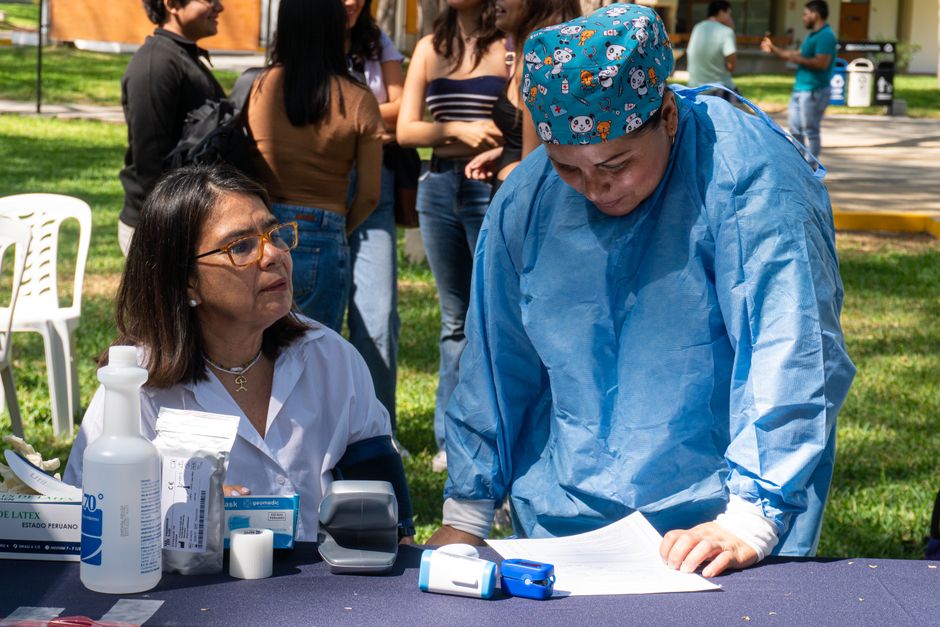
Yes, an online LPN program can lead to licensure in your state only if its curriculum meets your state’s requirements, the program is approved by the appropriate nursing regulator, and you can complete its required in-person skills and clinical work. Verify those items in writing before enrolling. Online coursework is not the same as an entirely online nursing education.
Can I complete an LPN program entirely online?
No. A practical nursing program may deliver some coursework online, but required skills practice and clinical learning are separate parts of the education. The label to watch is not “online.” It is “approved for your state, with a workable in-person plan.”
The National Council of State Boards of Nursing identifies direct patient care as a core quality measure: 50% or more of clinical experience in each clinical course should be direct care with patients. That is the practical dividing line. Reading, assignments, and virtual instruction can travel to your laptop; patient care and supervised skill development require real settings and real scheduling.
State rules can be more specific. Virginia requires practical nursing programs to provide at least 400 hours of direct client care supervised by qualified faculty. It permits no more than 100 of those hours to be simulation, and it says ordinary skills-lab training does not count toward those direct-client-care hours. Louisiana requires at least 700 theory hours and 800 clinical hours in its approved practical nursing programs. Those figures are not a national template. They show why a generic promise of “online flexibility” is not enough.
| What the school calls it | What you need to verify | Why it matters |
|---|---|---|
| Online coursework | Which classes are remote and how attendance or testing works | Remote delivery can help with study time, but it does not erase other requirements. |
| Skills lab | Where it occurs, how often you travel, and whether it counts toward state clinical requirements | Virginia distinguishes skills training from direct client care. |
| Clinical placement | Site, schedule, supervision, and who arranges it | Clinical learning is the part that develops patient-care experience and can disrupt a work schedule. |
The phrase swap: do not ask, “Is this program online?” Ask, “Which requirements are remote, which are in person, and what exact clinical and skills commitments must I complete?” The first question produces marketing language. The second produces a schedule you can evaluate.
How do online LPN programs handle clinical rotations?
Online LPN programs handle clinical rotations through planned, hands-on learning at approved care settings, not through online coursework alone. According to the Accreditation Commission for Education in Nursing, clinical or practicum learning can occur in hospitals, long-term-care facilities, ambulatory centers, physician offices, communities, or home health care.
There is no single ACEN minimum clinical-hour number for practical nursing programs. The program must provide enough clinical/practicum learning for students to meet outcomes, receive feedback, and improve. Your state and the program’s approval conditions set the requirements that matter for your path.
Placement ownership is the stress test. A student may help identify a preceptor, but ACEN says program faculty and leaders are responsible for identifying and arranging preceptors and ensuring each student has one. A school that asks you to do all the placement work has shifted a central operational risk onto you. Get the division of responsibility in writing before you enroll.
Use this script with admissions: “Please confirm who arranges my preceptor and clinical site, whether placements are guaranteed, the usual geographic area for placements, and what support applies if a site falls through.” Then ask for the expected clinical schedule. A working adult needs the actual commitment, not a vague assurance that the program is flexible.
Location can impose another limit. The Washington State Board of Nursing says its approved out-of-state clinical placements are authorized for Washington residents only, citing limited availability and a priority for students expected to join Washington’s nursing workforce. That is a useful warning: an advertised placement option may be real and still be unavailable to you because of where you live.
Before signing, run the calendar-and-commute drill: put every known lab date, clinical day, likely travel window, and work obligation on one calendar. Then ask your employer what schedule changes are possible. This is the same practical comparison discipline used when weighing a career move or training route, as explained in How Can Teachers Transition to Instructional Design or Corporate Training?. A program works only if the stated route also fits your actual week.
How do I know whether an online LPN program is approved in my state?
You know by checking the state nursing regulator, the program’s published distance-education disclosures, and the school’s written confirmation for your location and intended work state. Do not accept institutional accreditation, a recruiter’s verbal assurance, or an out-of-state approval as a substitute for that check.
NCSBN explains that, for students enrolling on or after July 1, 2024, a PN curriculum must meet educational requirements in the student’s distance-education state at initial enrollment or in the state where the student intends to work. Programs covered by the federal rule must publicly list states where the program meets and does not meet educational requirements. If the program has not determined that it meets requirements in your state, or has determined that it does not, it cannot enroll students located there.
- Start with your destination state. Identify the state where you live when enrolling and the state where you intend to seek licensure.
- Check program approval. NCSBN says graduates must show evidence of graduating from a nursing-regulatory-body-approved program to be eligible for the NCLEX. Find the current status through the relevant board of nursing, not only through the school.
- Read the distance-education disclosure. Ask the school to point to its public state authorization or professional-licensure disclosure and send written confirmation for your situation.
- Separate approval from accreditation. ACEN explains that state approval and specialized nursing accreditation are different. State approval is generally required for a program to operate; ACEN accreditation is voluntary external peer review.
- Check the clinical plan. Confirm in-person locations, placement responsibility, travel expectations, and whether any residency rule affects you.
- Save the answers. Keep the school’s written confirmation, links, and program documents with your enrollment records.
The approval-versus-accreditation distinction is easy to blur and expensive to ignore. ACEN warns that a school can have institutional accreditation while its nursing program lacks specialized nursing accreditation. It also notes that state approval status can affect licensure examination eligibility, while graduation from a non-accredited program can limit options in some states, employment settings, financial aid, credit transfer, or further nursing education.
Finish with a direct written request: “I will be located in [state] at initial enrollment and intend to seek licensure in [state]. Please confirm that this practical nursing curriculum meets the applicable educational requirements, identify the approving nursing regulator, and explain how my required clinical placement will be arranged.” If the answer is incomplete, pause. The missing detail is the decision.
Frequently Asked Questions
Will an online practical nursing program make me eligible for the NCLEX-PN?
It can, but only when you graduate from a nursing-regulatory-body-approved program and meet the requirements of the state where you apply. NCSBN says graduates must show evidence of graduating from an approved nursing program to be eligible for the NCLEX. Program completion alone does not guarantee a license; Louisiana, for example, also requires an application, criminal-history review, fees, and other qualifications.
Can I work while completing online LPN coursework and clinicals?
Online coursework may give you more control over when you study, but clinical placements and in-person skills requirements still create fixed commitments. Before enrolling, ask for the clinical calendar, location, expected travel, and placement process in writing so you can compare those demands with your employer’s schedule. Do not assume that online lectures mean clinical shifts can happen on evenings or weekends.
What questions should I ask a school before enrolling in an online LPN program?
Ask whether the program is approved by the nursing regulator in your intended licensure state, whether its curriculum meets that state’s distance-education requirements, and whether the school will confirm this in writing. Ask who arranges preceptors and placements, which locations students use, what in-person skills and clinical requirements apply, and what happens if a placement is delayed. Also ask whether the nursing program itself has specialized accreditation, rather than relying on the school’s institutional accreditation alone.
Sources
- National Council of State Boards of Nursing: Board of Nursing Licensure Requirements
- National Council of State Boards of Nursing: Approval of Nursing Education Programs
- National Council of State Boards of Nursing: Guidelines for Prelicensure Nursing Program Approval
- Accreditation Commission for Education in Nursing: Clinical/Practicum Learning Experiences
- Accreditation Commission for Education in Nursing: Frequently Asked Questions
- Virginia Board of Nursing Regulations
- Louisiana State Board of Practical Nurse Examiners: Student Enrollment
- Washington State Board of Nursing: Approved Nursing Education Programs