
How Do I Choose an Escorted Rail Holiday With Limited Mobility?
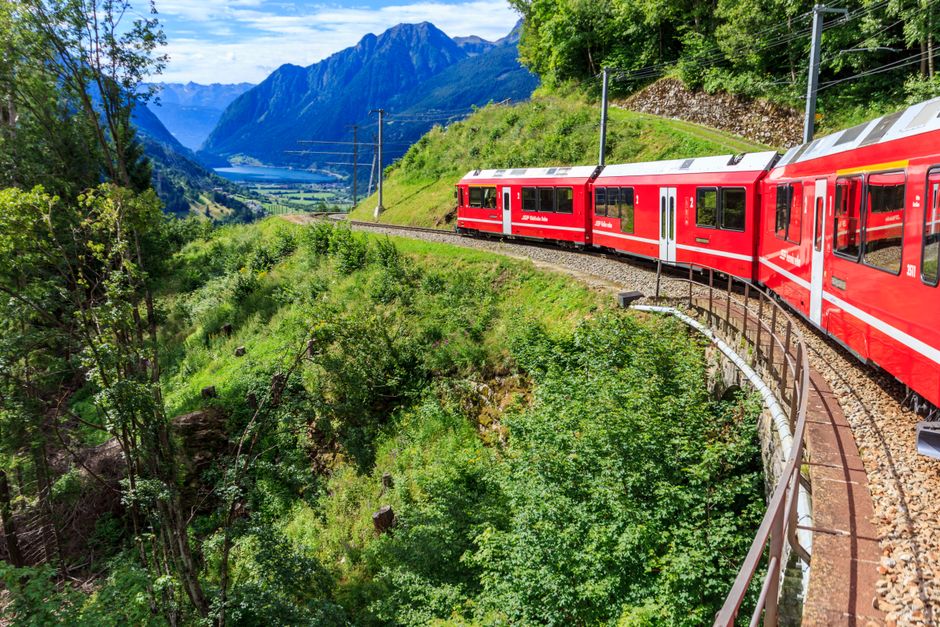
Choose an escorted rail holiday by checking four things before you book: the walking and stair demands on every transfer, who moves luggage, whether cabins or seats match your access needs, and how station assistance is arranged. An escort is useful, but it does not replace confirmed rail assistance, realistic connection time, or a route that fits your pace.
The useful comparison is not “easy” versus “active.” It is how many handoffs the itinerary creates: hotel door to vehicle, vehicle to station, platform to carriage, carriage to hotel. Each handoff adds distance, timing pressure, and a chance that luggage or mobility support becomes your problem. Get the operating details first. Then decide whether the holiday earns its convenience.
Are train holidays suitable for seniors with limited mobility?
Yes, train holidays can suit seniors with limited mobility when the route, accommodation, and assistance plan are matched to the traveler rather than assumed from the word “escorted.” The first job is to turn a brochure promise into specific answers: Are there stairs at the hotel? Is the transfer vehicle accessible? How long is the platform walk? Is there a lift or ramp at the relevant station?
Across the EU, rail passengers with disabilities or reduced mobility have a right to free assistance at stations and on board trains, according to European Commission guidance. That assistance includes boarding, alighting, and transferring to a connecting service covered by the ticket. It is a strong baseline. It is not a reason to leave the request until travel day.
Use the handoff test. For every travel day, ask the tour company to identify the pickup point, station entrance, platform route, train change, hotel entrance, and luggage owner. A vague answer such as “the tour manager will assist” leaves too much cognitive load on you. A workable answer names who meets you, where, and what happens if you need a ramp or extra time.
| Booking question | Why it changes the trip | Useful wording |
|---|---|---|
| Station and platform access | Platforms and changes can be the hardest part of a rail day. | “Please confirm the station meeting point, lift availability, and whether assistance is booked for every connection.” |
| Hotel location | A central hotel can still involve steps, slopes, or a long walk from the coach drop-off. | “What is the walking route from vehicle to reception, including any steps?” |
| Transfer timing | Short connections remove recovery time when a train is late. | “What is the scheduled connection time, and what is the alternative if assistance takes longer?” |
| Room and cabin setup | An accessible label does not explain the actual layout. | “Which room or cabin type is assigned, and what access features are confirmed?” |
If a rail holiday is also part of checking whether a European destination could work for a future move, use the trip to observe practical access rather than only scenery. For example, readers considering a relocation can also review how job seeking in Denmark works without speaking Danish. Keep the two decisions separate: a pleasant short visit does not answer every day-to-day question.
Do escorted rail tours handle luggage between hotels and stations?
Some escorted tours may coordinate luggage, but you should not assume the escort, hotel, coach driver, or rail operator will carry every bag on every leg. Ask the tour company for its exact luggage chain in writing: whether bags stay on a coach, are moved hotel-to-hotel, are carried to the platform, or must travel with you on the train.
Rail assistance can help, but the scope matters. National Rail says Passenger Assist can include carrying up to three pieces of luggage when each item can be safely managed by one person. It can be requested in advance or on the day, although detailed operator luggage policies differ. Travelers who are not disabled or mobility-restricted are generally responsible for their own luggage.
That gives you a practical rule: pack for the least-supported transfer, not the best-supported one. “We have luggage help” is the weak version. “I can manage my own essential bag if the hotel-to-platform handoff changes” is the strong version. Keep medication, travel documents, water, and anything needed during a delay in the bag that stays with you.
In Great Britain, Passenger Assist is free for people who need help because of disability, temporary impairment, or old age, and no railcard is required. The Office of Rail and Road states that bookings require no more than two hours’ notice since 1 April 2022, while staff can help with tasks from changing platforms to finding a seat. That is valuable support. It is not the same service as hotel-to-hotel porterage, so confirm both separately.
How much walking is involved on a European train holiday?
Walking can range from a manageable station route to a demanding sequence of hotel exits, platforms, carriage steps, city tours, and luggage handoffs, so there is no single mileage figure that answers the question. Public guidance does not provide a universal walking-distance standard for escorted European rail holidays. Your itinerary is the evidence.
Ask for a day-by-day mobility brief before booking. It should cover walking distance where the operator can provide it, stairs, uneven surfaces, platform changes, coach-to-hotel distance, and whether sightseeing is optional. Do not settle for “moderate walking.” That phrase does not tell you whether the difficult part happens at 8 a.m. with bags or after a long train ride.
- Mark transfer days. These carry the highest stakes because walking, luggage, timing, and unfamiliar stations arrive together.
- Check notice periods. EU guidance says assistance should normally be requested at least 24 hours ahead, with up to 36 hours in some countries. Eurail notes that requirements vary by country and operator.
- Protect connection time. Eurail advises wheelchair users to allow enough transfer time because delays can make last-minute replacement accessible-seat bookings difficult.
- Confirm the meeting point. Where no meeting time is specified, European Commission guidance says to arrive at the designated station point at least 30 minutes before departure.
For an overnight train, inspect the cabin as closely as the route. Amtrak’s Accessible Bedroom guidance describes entry-level rooms with wheelchair space, daytime seating that converts to upper and lower beds, and a dedicated attendant. It also warns that Superliner sleeping cars have two levels while Viewliners have one, and that wheelchair access onboard is generally limited to the boarding area and seating or private-room areas. The lesson applies broadly: ask which equipment is assigned, not merely whether an accessible cabin exists.
Close the booking with a two-minute drill. Read the itinerary aloud and stop at every station, hotel, and train change. For each stop, answer: “Who meets me, who moves the bag, where is the accessible route, and how much time do I have?” Any blank answer is a question to send before payment.
Frequently Asked Questions
Can I request accessible seating or help boarding a train?
Yes. EU rail passengers with disabilities or reduced mobility have a right to free assistance at stations and on board, including boarding, alighting, and ticketed connections; requests normally need at least 24 hours' notice, though some countries require up to 36 hours. In Great Britain, Passenger Assist can help with station navigation, ramps, seats, and connections, while Amtrak offers limited accessible seating, wheelchair spaces, rooms, and boarding equipment that should be reserved in advance.
Is an overnight train more comfortable than changing hotels every night?
It can be, but comfort depends on the assigned train and room rather than the overnight label. Amtrak Accessible Bedrooms are on the entry level and include wheelchair space, beds, and an attendant, but Superliner and Viewliner equipment have different layouts and onboard wheelchair access can be limited beyond the boarding and private-room areas. Compare the room, bathroom setup, boarding level, and dining access against the effort of repeated hotel changes before deciding.