
Choose the Right Luxury Passenger Van for Seats, Safety, and Cost
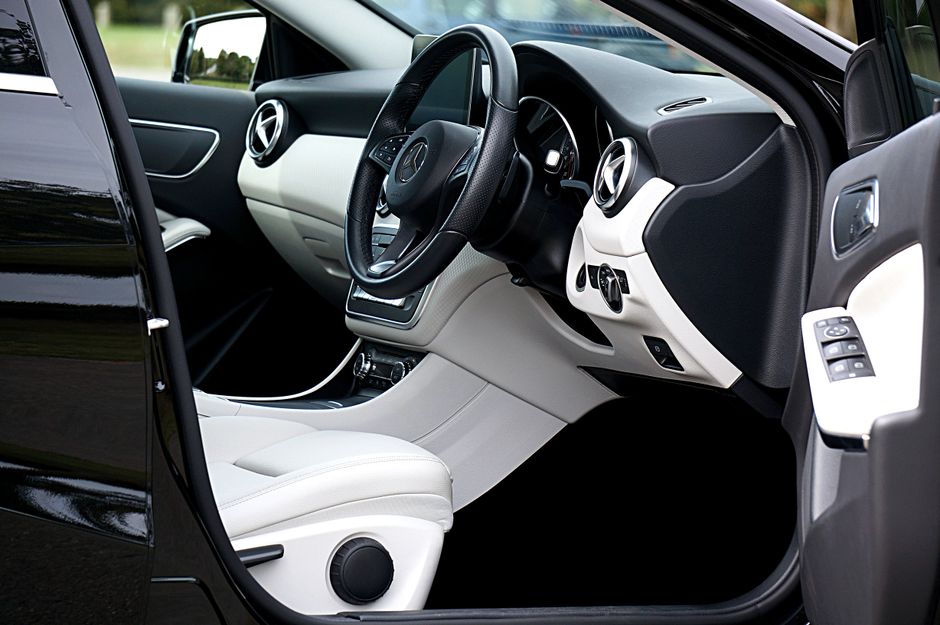
Choose a factory Ford Transit when you need 12 or 15 seats, strong published driver-assistance coverage, and substantial luggage capacity; choose a 12-seat Mercedes-Benz Sprinter when its published dimensions, standing height, payload, towing, and $64,780 starting price fit the job. Do not call either the most reliable from these sources: they do not publish a comparative reliability ranking. Treat an accessibility or luxury conversion as a separate safety and ownership decision.
The useful buying move is the trip-capacity check: count people, then account for bags, seated comfort, climate control, safety equipment, and the weight added by any conversion. A van that technically seats a group can still be the wrong tool when the rear rows lose luggage room or a modification consumes payload.
What is the most reliable luxury passenger van?
The most reliable luxury passenger van cannot be identified from the supplied sources, because they provide no comparative reliability, repair-frequency, maintenance-cost, insurance-cost, or resale-value ranking for the Ford Transit and Mercedes-Benz Sprinter.
That is not a dead end. It is a decision boundary. Do not replace missing reliability data with a badge, a glossy interior, or a salesperson's general assurance. Compare the published facts that affect your use, then get vehicle-specific ownership documentation before committing.
For a factory choice, the cited 2025 Ford Transit Passenger Van is available in 2-, 12-, and 15-passenger configurations. The cited 2026 Mercedes-Benz Sprinter Passenger Van Select is rated for 12 occupants. Mercedes-Benz lists a $64,780 starting price for the 144-inch-wheelbase rear-wheel-drive Select, before options, taxes, conversion work, and ownership costs. Ford pricing is not published in the supplied research.
For an accessibility conversion, use a different screen. The National Mobility Equipment Dealers Association's Compliance Review Program uses third-party automotive engineering experts to review compliance with specified legal safety standards. That review matters because an upfit is not automatically covered by the original factory specification. Ask a direct question: “Can you show the safety-review documentation for this exact conversion?”
| Option | Who it suits | Published cost | Key limitation |
|---|---|---|---|
| 2025 Ford Transit Passenger Van XLT | Buyers needing a published 12- or 15-passenger layout | Not published in the supplied sources | The last row does not recline; capacity still requires a luggage plan |
| 2026 Mercedes-Benz Sprinter Passenger Van Select | Buyers needing a published 12-occupant van with stated cargo, payload, and towing figures | Starts at $64,780 for the 144-inch RWD model, before options, taxes, conversion work, and ownership costs | Published seating capacity is 12, not 15 |
| Accessibility-focused luxury conversion | Buyers whose need includes mobility equipment or structural accessibility changes | Not published in the supplied sources | Review the specific conversion's safety documentation; NMEDA review is not validation of every non-accessibility luxury upfit |
Should I buy a Mercedes Sprinter or Ford Transit passenger van?
Buy the Ford Transit when 15 seats, rear auxiliary climate control, and Ford's published safety-feature set are the deciding requirements; buy the Mercedes Sprinter when 12 seats, published high-roof standing height, payload, cargo, towing, and the known starting price are the clearer fit.
The Ford's seating layout is concrete, not vague. Ford lists 15-passenger seating as rows of 2, 3, 3, 3, and 4 seats, and lists 12-passenger and 15-passenger XLT layouts. It also lists rear-seat recline and inboard armrests except in the last row. That makes the final row the first comfort question for a recurring executive-shuttle route: who will sit there, and for how long?
Ford lists front and rear auxiliary air conditioning and heat, plus Pre-Collision Assist with automatic emergency braking, Blind Spot Information System with Cross-Traffic Alert and Trailer Coverage, Lane-Keeping System, Forward Collision Warning, and Post-Collision Braking. Adaptive cruise control, a 360-degree camera, and reverse brake assist are available equipment, so use a precise request: “Which of these features are installed on this VIN?”
Mercedes publishes a different kind of clarity. The standard-roof Sprinter Select is rated for 12 occupants, 70 cubic feet of cargo volume, 3,307 pounds of payload, and 5,000 pounds of maximum towing. The high-roof Select remains rated for 12 occupants and lists 76 inches of standing height and 82 cubic feet of cargo volume. Its diesel high-output four-cylinder is rated at 211 horsepower and 332 lb-ft of torque with a nine-speed automatic transmission.
The weak buying question is, “Which van is more luxurious?” The stronger one is, “Which published configuration carries our people, bags, and equipment without forcing a compromise on every trip?” The sources do not publish an apples-to-apples cost of ownership comparison, so do not claim one has lower fuel, maintenance, insurance, or resale costs from this evidence.
How many people can a luxury passenger van seat comfortably?
A luxury passenger van seats people comfortably only when the seating count leaves enough room for their luggage, climate needs, and safe weight distribution; the cited Ford can be configured for 12 or 15 passengers, while the cited Sprinter Select is rated for 12 occupants.
Start with seating, then run the bag test. Ford's 2025 technical specifications list 100.5 cubic feet behind the fifth row for the extended high-roof passenger van. They also list passenger-van cargo volume behind the first row ranging from 223.5 to 461.9 cubic feet depending on roof and length. Those are configuration-specific figures, not a promise that every Transit with every seating layout has the same luggage capacity.
Next, run the weight test. Mercedes lists a 9,050-pound maximum GVWR and a 3,307-pound payload for the cited standard-roof Select. Passengers, luggage, and conversion equipment all belong in that calculation. The practical instruction is simple: request the exact vehicle's payload information, list what travels with the group, and do not use the seat count as a substitute for that work.
Then run the safety-use test. The National Highway Traffic Safety Administration reports that 57% of the 235 occupants killed in 15-passenger-van rollover crashes from 2010 through 2019 were ejected, and 69% of occupants killed in crashes in that period were known not to be wearing a seat belt. NHTSA says an unrestrained occupant in a single-vehicle 15-passenger-van crash is approximately four times more likely to be killed than a restrained occupant.
NHTSA's operating guidance is usable: when the van is not full, fill seats from front to back; place cargo forward of the rear axle; avoid roof loads; and check tire pressure before each use. It also says newer 15-passenger vans benefit from electronic stability control, while warning that these vehicles need more braking distance and do not handle abrupt maneuvers like cars. Assign experienced drivers, make belts non-negotiable, and treat every departure as a short safety check.
Purchase drill: before a deposit, ask the seller for the exact seating layout, cargo figure for that configuration, payload label, installed safety features, and any conversion compliance documentation. If a dealer cannot answer one of those questions, the vehicle is not ready for a confident buying decision.
Frequently Asked Questions
Is a luxury conversion van worth the extra cost?
It can be worth it when the conversion solves a specific passenger-comfort or accessibility need that a factory van does not meet. The supplied sources do not publish conversion prices, resale values, insurance costs, or maintenance costs, so request those figures in writing and evaluate the exact conversion rather than assuming amenities add equivalent value. For accessibility modifications, check whether the specific conversion has been reviewed through NMEDA's Compliance Review Program or carries relevant MQAP support.
What features should I look for in an executive passenger van?
Start with the seating layout, rear climate control, luggage space, and the safety equipment that is actually included or available. Ford lists front and rear auxiliary air conditioning and heat, rear-seat recline and inboard armrests except in the final row, plus listed driver-assistance features; Mercedes publishes standard- and high-roof cargo, standing-height, payload, and towing figures. Ask the seller to identify which features are standard on the exact vehicle, because published availability is not the same as installed equipment.
Can a luxury passenger van be practical for daily family use?
Yes, if the seating count, cargo plan, and driving routine match your actual use rather than the largest advertised capacity. Ford offers 12- and 15-passenger Transit layouts, while the cited Sprinter Select is rated for 12 occupants; both require a deliberate passenger-and-luggage plan. NHTSA also stresses experienced driving, seat-belt use, tire-pressure checks, front-to-back seating when not full, and cargo placement forward of the rear axle for 15-passenger vans.
Sources
- National Highway Traffic Safety Administration: 15-Passenger Vans
- Ford Motor Company: 2025 Transit Passenger Van XLT
- Ford Motor Company: 2025 Transit Technical Specifications
- Mercedes-Benz Vans: 2026 Sprinter Passenger Van Select
- National Mobility Equipment Dealers Association: Compliance Review Program