
How Do You Plan a Three-Day Switzerland Trip With Less Transit?
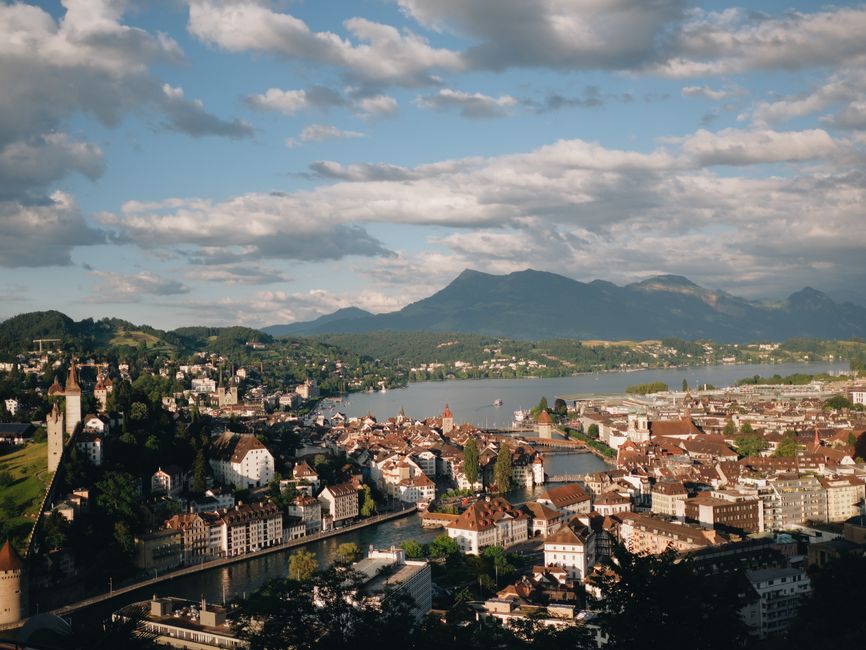
For three days, choose one base and one nearby excursion rather than crossing the country each day. Lucerne works well for a compact lake-and-mountain trip; Interlaken suits visitors prioritizing the Jungfrau Region. A Swiss Travel Pass costs CHF 254 in second class for three days through 31 December 2026, so compare that with your planned point-to-point fares before buying.
Which places can I realistically see in three days in Switzerland?
In three days, plan around one or two regions, not a checklist of distant cities. Every transfer takes time from the same small budget as sightseeing, meals and checking in.
SBB’s sample three-day route starts with Zurich, Lucerne and Rigi, continues from Lucerne to Interlaken on day two, then reaches Montreux on day three. The Lucerne–Interlaken leg takes just under two hours; the Interlaken-to-Lake Geneva stretch takes just over three hours on the GoldenPass Express. This route proves the connections are possible, not that every stop deserves equal time.
For a lower-transit version, use the arrival and departure airports to choose the direction of travel. If your flights begin and end near Zurich, a Lucerne-centered plan keeps the route compact. If your trip is built around the Jungfrau Region, stay in or near Interlaken and avoid adding a far-off final stop unless your departure logistics support it. The provided sources do not compare airport transfer times, so check the timetable for your own flights and dates.
Think in travel blocks. A day with a long intercity journey and a mountain excursion is a crowded day; a day with one base and one nearby outing leaves room for weather and delays. SBB’s three-day Switzerland itinerary is useful as a route reference, but trimming a stop is often the simplest way to make the trip feel less rushed.
Should I choose Lucerne, Interlaken, or Zermatt for a short trip?
Choose Lucerne for a focused Rigi outing, Interlaken for access to the Jungfrau Region, and Zermatt only when it is the main destination you want to prioritize. The supplied sources provide detailed journey information for Lucerne and Interlaken, but not enough to compare Zermatt’s transport times or costs.
| Base | Best fit for | Planning trade-off |
|---|---|---|
| Lucerne | A compact city-and-mountain plan with Rigi | Adding Interlaken and Montreux creates longer travel legs. |
| Interlaken | A Jungfrau Region excursion | Jungfraujoch takes about two hours each way from Interlaken Ost. |
| Zermatt | A trip where Zermatt itself is the priority | The available sources do not give journey times or fares for this comparison. |
Lucerne gives a short-stay visitor a clear shape: arrive, settle in, and use a day for Rigi. SBB says the Rigi mountain railway journey is included with the Swiss Travel Pass. Rigi’s operator publishes separate cogwheel railway and cable-car timetables by season, so check the schedule for the exact travel date. The Goldau–Rigi Kulm route is scheduled to close for construction from 5–23 April 2027.
Interlaken is the stronger base when Jungfraujoch is the central goal. Interlaken Tourism puts the train journey from Interlaken Ost at about two hours each way. Jungfrau Railways describes a fast route from Grindelwald Terminal taking about 50 minutes, including transfers, and a traditional route from Grindelwald or Lauterbrunnen taking about 90 minutes. Those timings begin at different points, so they are not alternatives to the full journey from Interlaken Ost.
Jungfrau Railways lists fares from CHF 129.60 and recommends seat reservations; reservations are mandatory from 1 May to 31 October 2026. The excursion takes a substantial portion of a day, and the tourism authority warns dates can become fully booked. For a two-night stay, make that the main outing rather than treating it as a quick stop between other destinations.
Is a Swiss Travel Pass worth it for only three days?
A three-day Swiss Travel Pass is worth considering when its price is lower than the total cost of your planned travel and included or discounted outings. The adult pass costs CHF 254 in second class or CHF 405 in first class through 31 December 2026; the Youth pass is CHF 179 in second class or CHF 285 in first class.
Use a route-by-route comparison. First, list every train, boat or mountain journey you expect to take. Then check the fares for those routes and dates in the SBB timetable, adding any applicable Half Fare Card or Travelcard fare only if you have that product. Compare the sum with the pass price for the class you plan to use.
SBB says point-to-point tickets are available at full fare or Half Fare Card/Travelcard fare, in first or second class. They generally apply to the specified calendar day until 5 a.m. the following day and permit breaks along the selected route. SBB also says a ticket lets you use any connection on the selected route that day. A fixed route with few journeys can favor individual tickets; frequent travel across the pass’s consecutive days can make the pass more attractive.
Include mountain travel in the calculation. Rigi’s mountain railway journey is included with the Swiss Travel Pass, while SBB lists a 25% discount on the Jungfraujoch journey. That discount does not make the pass automatically cheaper: compare the remaining Jungfraujoch fare plus your other transport against the pass total. Prices and operating schedules can change, so use the published details for your dates before purchasing.
The pass is sold for 3, 4, 6, 8 or 15 consecutive days. For a three-day visit, compare the three-day option against the exact days you will travel rather than assuming a pass is the default. The best choice follows the itinerary; the itinerary should not be stretched to justify a ticket.
Frequently Asked Questions
How much time should I allow for trains between Swiss destinations?
Use the SBB timetable for your actual route and travel date. SBB’s sample itinerary puts Lucerne to Interlaken Ost at just under two hours, while Interlaken to the Lake Geneva region takes just over three hours on the GoldenPass Express. Add time for transfers and excursions when planning a day.
Can I visit the Jungfraujoch or Mount Rigi on a two-night trip?
Yes, if the mountain trip is a main purpose of the visit and the itinerary stays focused around a suitable base. Jungfraujoch takes about two hours each way from Interlaken Ost, so it occupies a substantial part of a day. Rigi is a more natural excursion from Lucerne, but check the operator’s seasonal timetable for your dates.
Sources
Keep reading
How Do I Choose a 14-Day Greek Island Cruise?
Compare Greek island cruise routes, real port hours, ship sizes and crowding before choosing a 14-day itinerary.
Is Kanab or Springdale a Better Base for Utah’s National Parks?
Compare Springdale, Kanab, Moab, and Torrey by park access, driving tradeoffs, crowds, and what the available lodging data can tell you.
Which Mediterranean Cruise Ports Are Best for Travelers With Limited Walking?
A port-by-port guide to choosing a Mediterranean cruise when walking is limited, including tenders, scooters, excursions, Rome, and Santorini.
Is One Week Enough for a Calgary-to-Vancouver Road Trip?
A practical one-week Calgary-to-Vancouver drive plan with manageable overnight stops, park-pass guidance, and detours worth skipping.