
Bifacial Solar Panels: When the Extra Cost Pays Off
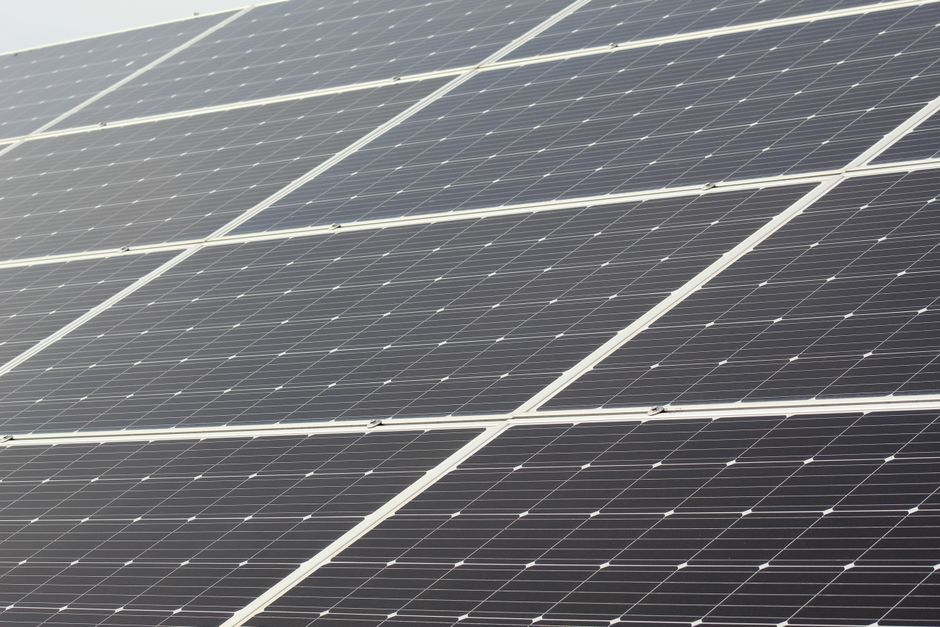
Bifacial panels earn their keep when sunlight can reach the rear face: elevated mounts, reflective ground, open spacing, and little rear-side shade all help. On a typical flush-mounted home roof, tight clearance and limited reflected light restrict that advantage. Compare the installer's site-specific energy estimate with the panel premium, and check inverter current limits using gain-adjusted module specifications before deciding.
Do bifacial solar panels generate more electricity on a typical home roof?
They can, but a typical flush-mounted roof limits the rear-side light that creates the gain. Residential roof modules sit close to the roof, leaving little open space for reflected light to reach their backs.
NREL's System Advisor Model (SAM) describes typical fixed roof mounts as having about 2–6 inches between module and roof, with limited airflow. SAM estimates rear irradiance using solar resource, sun position, orientation, ground reflectance, row spacing, and module bifaciality. A panel's bifacial label alone does not determine the household's added energy.
Site geometry matters. NREL's sensitivity study modeled ground clearance, tilt, albedo, and array size, and validated the modeling against measured data from Sandia National Laboratories' fixed-tilt testbed. In a large array over ground with 21% albedo, the center module generated up to 7% less energy than a single bifacial module because of horizon blocking and ground shadows. Array performance does not translate directly from one exposed panel.
For a roof quote, ask what rear-side gain the estimate assumes and what evidence supports that assumption for this roof. The model should reflect roof clearance, tilt, obstructions, surface reflectance, and layout. If those details are absent, the gain figure is not yet a property-specific estimate.
Are bifacial panels worth the extra cost for a residential installation?
They are worth the premium only when the value of the estimated extra electricity exceeds that premium over the comparison period used in the quote. The provided research does not publish a universal residential price premium or payback period, so compare the actual offers rather than relying on a generic savings claim.
Start with two otherwise comparable proposals: one using monofacial modules and one using bifacial modules. Have the installer state the expected annual energy for each, the assumed rear-side gain, and any changes in inverter or mounting costs. Then compare the added equipment and installation cost with the value assigned to the additional energy. Ask for the calculation and its assumptions in writing.
Reflective ground can improve the case, but albedo is not a fixed property. NREL's albedo report defines it as the fraction of incoming sunlight reflected by a surface and notes that it changes with surface condition, sun position, season, and weather. Dry soil reflects more than wet soil; dry vegetation reflects more than green vegetation. One measured or assumed surface condition should not stand in for the whole year without explanation.
Use this table as a screening guide, not a price list. NREL and SAM describe the mounting and modeling factors; the sources do not publish residential installed costs for these options.
| Option | Who it suits | Cost information | Key limitation |
|---|---|---|---|
| Flush roof mount | Homeowners using a typical residential roof installation | Premium and total cost: not published | Limited clearance and reduced reflected light can restrict rear-side gain |
| Elevated ground mount | Properties with suitable open ground and a layout that exposes panel backs | Premium and total cost: not published | Gain depends on clearance, tilt, albedo, spacing, shade, and array size |
| Carport or pergola | Properties where panels can be mounted above an open area | Premium and total cost: not published | Site-specific rear irradiance and system economics: not published |
Carports and pergolas can create more rear-side clearance than a flush roof, but the supplied sources do not quantify their residential energy gains or costs. Treat them as designs to model, not guaranteed upgrades. The installer should show how the chosen structure, ground, shade, and panel layout produce the estimate.
How does mounting height affect bifacial solar panel output?
More clearance can expose the rear face to more reflected light, but height alone does not set output. Ground reflectivity, tilt, row spacing, shading, weather, and array size also shape the result.
NREL's sensitivity study says height and albedo directly affect bifacial performance. In its modeled single-module case with about 1 m of ground clearance in Albuquerque, seasonal optimum tilt ranged from about 5° at the summer solstice to about 65° at the winter solstice. Those are modeled seasonal optima for that case, not a universal residential mounting prescription; the study notes that optimum tilt also depends on array size, weather, and albedo.
A larger array can shade the ground and block low-angle light from reaching central modules. NREL's separate performance-model report identifies clearance, tilt, albedo, row spacing, backside shading, and system size as inputs to rear-irradiance estimates. It also cautions that energy gain includes mismatch and shading losses, so an irradiance estimate is not the same as delivered system energy.
When reviewing a quote, ask the installer to show the modeled clearance and tilt, the surface albedo used, the panel spacing, and nearby shade assumptions. Ask whether the result is rear irradiance or modeled energy after system losses. A sound estimate connects each input to the proposed property.
Inverter sizing and warranties also belong in the comparison. NREL SAM describes a typical DC-to-AC ratio range of 1.10–1.25, with the optimal ratio depending on location, orientation, and module cost; this is context, not a one-size-fits-all target. Enphase's 2023 technical brief advises estimating site-specific bifacial gain and checking gain-adjusted maximum-power current and short-circuit current against microinverter specifications. Ask the installer to identify the applicable module and inverter limits, and to provide the warranty terms for the exact equipment being quoted.
Frequently Asked Questions
Do bifacial panels work better over snow, gravel, or grass?
They perform better when the surface reflects more sunlight toward the rear face. NREL defines this reflection as albedo and notes that it varies with surface condition, season, weather, and sun position; its data describe several surface types, but do not provide a universal ranking or output figure for snow, gravel, and grass.
Do bifacial panels need a different inverter or system design?
Not automatically, but the design must account for added rear-side current. Enphase advises estimating site-specific gain and checking gain-adjusted maximum-power and short-circuit current against the microinverter limits. SAM models rear irradiance using factors such as albedo and row spacing, so the estimate should reflect the actual layout.
Sources
- NREL, “A Sensitivity Study of the Impact of Installation Parameters and System Configuration on the Performance of Bifacial PV Arrays”
- NREL, “Albedo Data Sets for Bifacial PV Systems”
- NREL, System Advisor Model (SAM) Help, “System Design”
- NREL, “Bifacial PV Performance Models: Comparison and Field Results”
- Enphase Energy, “Pairing Enphase Microinverters with Bifacial Solar PV Modules”
Keep reading
Rent-to-Own Gaming PCs: Compare the Total Cost Before You Sign
Compare rent-to-own gaming PC costs with cash, used, and financing options. Learn when ownership transfers and what return terms to check.
Why Is My Solar System Using Grid Electricity or Saving Less?
Learn how to distinguish real grid use from misleading solar monitoring readings, and what records to gather before contacting your installer.

When Is Wireless Vibration Monitoring Worth Using?
A practical guide to choosing wireless vibration monitoring for critical pumps, motors, fans, compressors, and slow-speed machinery.

How Can I Replace Cable TV Without Missing What I Watch?
A channel-first guide to replacing cable with an antenna, free streaming, on-demand apps, and live-TV services.