
When Is Wireless Vibration Monitoring Worth Using?
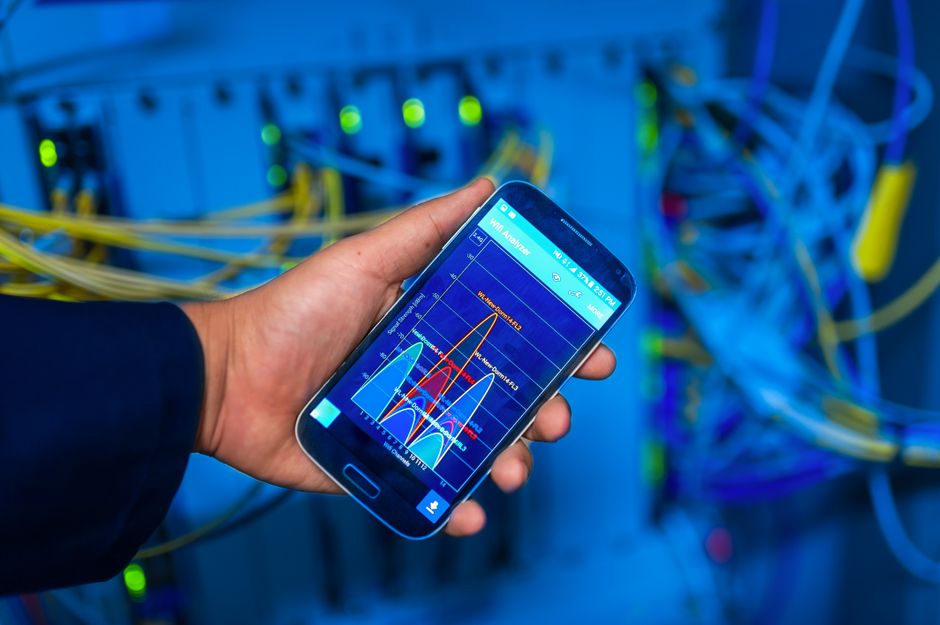
Wireless vibration monitoring is worth using when a pump, motor, fan, compressor, or slow-speed machine has costly downtime, infrequent route coverage, or bearing risk that needs trend data between inspections. It is not a substitute for judgment. Use it first on critical assets, validate the sensor and alarm setup against the machine's speed and load, and keep route-based analysis for diagnosis.
Are wireless vibration sensors accurate enough for predictive maintenance?
Yes, when the sensor, sampling method, and analysis fit the fault being watched.
Wireless does not mean crude. A peer-reviewed study in the International Journal of Automation and Computing put envelope analysis on a Zigbee sensor node and successfully diagnosed simulated bearing faults. Processing at the node reduced transmitted data by at least 95% per frame compared with sending raw vibration data.
That result answers one narrow question well: wireless links do not prevent useful bearing analysis. It does not prove that every battery sensor, every mounting point, or every default dashboard alarm will work on every asset.
The U.S. Department of Energy's vibration-analysis guide frames the buying choice around machine speed, online or offline monitoring, analysis needs, and signal-output requirements. Those are the questions that come before brand, battery life, or a bright portal screen.
Accuracy has two parts. The instrument must capture the signal. The program must turn that signal into a right maintenance decision. A clean trend that nobody reviews is data. A threshold copied from a catalog is still a guess.
"It is impossible to establish absolute vibration limits. However, in setting up a predictive maintenance program, it is necessary to establish some severity criteria or limits above which action will be taken."
The DOE statement is the useful tension. Teams need limits. The limits cannot be universal. Start with published severity guidance only when history is absent, then replace it with baselines from the asset's normal operating states and findings confirmed during inspection.
| Monitoring choice | Best fit | What it does not solve |
|---|---|---|
| Route-based vibration checks | Lower-criticality assets and detailed technician-led diagnosis | Changes that arise between scheduled routes |
| Wireless permanent sensors | Assets that need frequent trends without new cabling | Poor sensor selection, weak mounting, or untested alarms |
| Wired continuous monitoring | Assets needing continuous signal access and deeper integration | The need for a response plan and trained review |
Choose the method by consequence and signal need. Convenience comes after both.
Which machines should get continuous vibration monitoring first?
Continuous monitoring belongs first on machines where an unplanned stop costs more than the monitoring program and where a trend can create usable repair time.
Build the list from criticality, not from which asset is easiest to fit. The DOE, Hydraulic Institute, and Europump pump life-cycle guide includes initial investment, installation, energy, operations labor, maintenance, repair, downtime, environmental cost, and disposal in its life-cycle-cost equation. It also states that downtime can exceed energy or maintenance cost, depending on the process.
That changes the order. A small standby fan with a ready replacement sits lower on the list than a modest motor that stops a production step. Physical size is not criticality.
Use four questions for each candidate asset:
- If this machine stops without warning, what costs begin at once?
- How long can the process run without it?
- How often does a route miss the early stage of a developing fault?
- Can the team act on an alert by scheduling a repair, ordering parts, or switching to backup equipment?
Give early priority to motor-driven pumps, fans, and compressors with no practical redundancy, difficult access, long repair lead times, or repeated bearing history. The DOE motor-system guide says bearing failures account for nearly two-thirds of motor failures and identifies vibration trending as a way to spot bearing trouble before overheating, insulation damage, or severe mechanical damage follows.
Continuous sensing does not belong everywhere. A machine with low consequence, easy access, stable duty, and a useful route interval can remain on route-based checks. Monitoring effort should follow the cost of being wrong.
The buying comparison resembles other technical purchase decisions: the useful question is not whether a device is advanced, but whether its operating trade-offs fit the job. That same plain-language test appears in this guide to how the Nissan Qashqai e-POWER works and whether it fits a buyer.
Can wireless sensors detect bearing failures on low-speed equipment?
Yes, wireless sensors can detect low-speed bearing faults when the sensor resonance, bandwidth, sampling, mounting, and analysis are built for the machine; generic defaults are not enough.
Slow rotation is a hard case. The 2023 IET Conference Proceedings study says low-speed rolling-element bearing faults produce low signal-to-noise ratios that gears, screws, and other machinery can mask. Its researchers tested at 30 and 60 rpm across four load-and-speed conditions. Envelope analysis with a low-cost, low-resonance sensor detected and diagnosed a seeded outer-race fault in all four conditions.
The study also draws a boundary. Sensor resonance must fall within the main frequency range of the low-speed bearing impact force. A sensor specification sheet and a default analytic setting do not establish that fit.
Research on wind-turbine pitch bearings makes the point sharper. The Sensors study indexed by the National Center for Biotechnology Information examined bearings at 10 rpm and below, where intermittent movement and high load complicate diagnosis. At 5, 8, and 10 rpm, entropy-based indicators reached classification accuracy up to 22 percentage points higher than 16 conventional indicators. The authors also state that controlled laboratory results need validation in noisier operating environments.
Low speed changes the procurement test. Ask the vendor to show the signal path for the specific bearing speed, load pattern, gear reduction, and mounting arrangement. Ask what feature is calculated, what sample settings support it, and how the alarm was validated. If those answers are absent, the system is reporting movement, not proving diagnosis.
Variable-load equipment needs the same discipline. Compare like with like: a baseline at one operating state should not trigger a verdict at another. Separate normal shifts in speed or load from changes that persist under comparable conditions.
Frequently Asked Questions
Should we use route-based vibration checks or permanently installed sensors?
Use permanently installed sensors where a machine's downtime cost, access limits, or failure exposure demands trend data between routes. Use route-based checks where assets are less critical or where a technician needs richer diagnostic data. A mixed program is often the soundest arrangement: continuous sensing for watchlist assets and periodic expert analysis for confirmation.
What vibration data and alarm thresholds should maintenance teams track?
Track the trend data that matches the fault and machine: overall vibration for broad condition change, plus bearing, gear, belt, alignment, looseness, and electrical indicators where the system supports them. Do not treat a severity chart or vendor default as a failure line. DOE says absolute vibration limits cannot be established, so teams need action criteria built from operating history and confirmed events.
How do I calculate the return on investment for vibration monitoring?
Start with the avoided cost of a failure event: repair or replacement, labor, lost production time, energy effects, and any environmental or disposal cost. Then subtract the cost of sensors, installation, connectivity, analysis, response labor, and false-alarm work. The DOE, Hydraulic Institute, and Europump life-cycle framework is useful because it includes downtime alongside maintenance and energy rather than treating the sensor price as the whole decision.
There is a useful benchmark, not a promise. DOE reports that high-end vibration analyzers with software and accessories can exceed $30,000 and says a typical industrial site can recover that investment within two years. In its 200-hp motor-pump case, a bearing repair cost less than $2,700, while continued failure would have required replacement costing more than $10,000.
Use site history where it exists. The machine that fails quietly can wait. The machine that stops the work cannot.
Sources
- U.S. Department of Energy, Federal Energy Management Program: Operations and Maintenance Best Practices Guide
- U.S. Department of Energy, Advanced Manufacturing Office: Extend Motor Operating Life
- U.S. Department of Energy, Hydraulic Institute, and Europump: Pump Life Cycle Costs
- International Journal of Automation and Computing: Wireless Sensor Node Bearing Fault Diagnosis Study
- IET Conference Proceedings: Low-Speed Bearing Fault Detection Study
- Sensors: Low-Speed Wind-Turbine Pitch Bearing Diagnosis Study
Keep reading

How Can I Replace Cable TV Without Missing What I Watch?
A channel-first guide to replacing cable with an antenna, free streaming, on-demand apps, and live-TV services.

How Much Does Starlink Cost at My Address?
Build an address-specific Starlink budget with monthly plans, hardware, shipping, taxes, installation, and Demand Surcharge costs.

How Do I Choose a Wearable Vibration Device for Important Sound Alerts?
Choose and configure wearable vibration alerts for critical sounds without turning every noise into another interruption.

Choose Managed DevOps, a Hire, or a Consultant With Less Guesswork
Choose managed DevOps, an internal hire, or a consultant with a practical framework for ownership, costs, security, and exit planning.