
How Does the Nissan Qashqai e-POWER Work, and Is It Right for You?
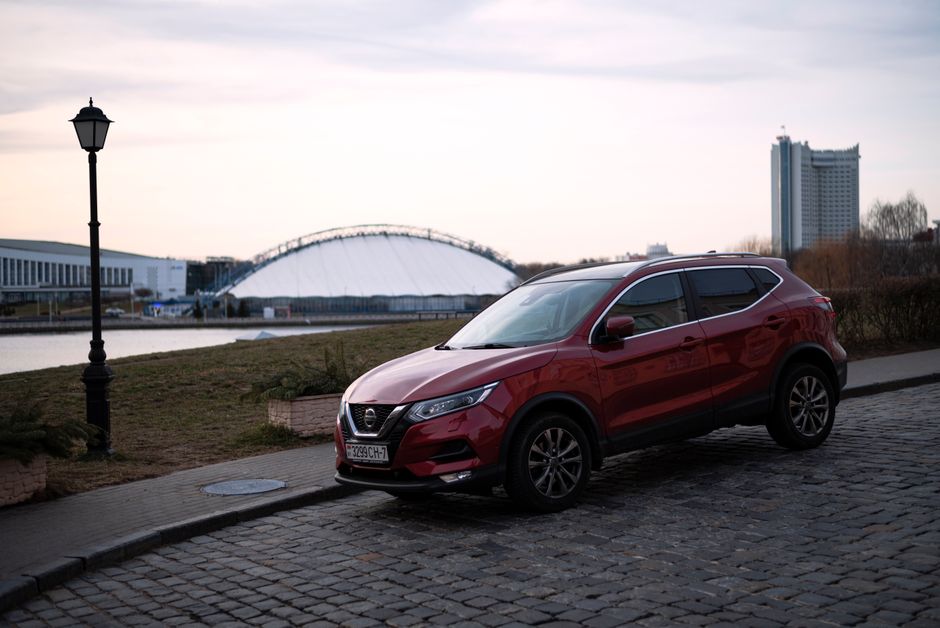
The Nissan Qashqai e-POWER drives its wheels with an electric motor throughout the journey, while its petrol engine generates electricity for the motor or battery. It delivers an automatic-style, electric-drive feel without a plug. It suits drivers who want petrol refuelling and strong urban efficiency, but motorway-heavy buyers should weigh real-world fuel use and engine noise.
Is the Nissan Qashqai e-POWER fully automatic?
Yes in the way it moves: an electric motor turns the wheels all the time, so the Qashqai e-POWER delivers power in an automatic-style flow rather than through a petrol engine driving the wheels.
The distinction is the whole point. Nissan UK says the petrol engine is used only to charge the battery, which powers the electric motor. The motor drives the wheels throughout the journey.
Inside the system sit a petrol engine, generator, inverter, driving motor, lithium-ion battery, DC/DC converter, and 12-volt battery. Nissan's owner's manual describes the chain plainly: the engine runs the generator; the electricity is stored in the lithium-ion battery or sent straight to the driving motor.
This changes the driving sensation, not the need to use a car's ordinary controls. There is no claim here that the car drives itself. The system also includes regenerative braking, EV mode, and e-Pedal Step. WhichCar reports that e-Pedal reduces brake-pedal use but does not bring the Qashqai to a complete stop. The brake pedal still matters.
| Part | Its job | What reaches the wheels |
|---|---|---|
| Petrol engine | Runs the generator | Electricity, not mechanical drive |
| Battery | Stores generated and recovered energy | Electricity for the motor |
| Electric motor | Propels the car | Drive force at the wheels |
Power is one thing. Sound is another. Top Gear notes that the three-cylinder engine can become audible as acceleration rises even though it is not connected to the wheels. A test drive should include a hard merge or steep hill, not only a quiet town loop.
Does the Qashqai e-POWER need to be plugged in to charge?
No. The Qashqai e-POWER does not need to be plugged in because its petrol engine generates electricity and regenerative braking sends deceleration energy back into the battery.
Nissan's e-POWER technology guide says the engine can send electricity directly to the motor or charge the battery. That means petrol refuelling remains the routine energy stop. There is no home-charging schedule to manage.
Regeneration does not create free energy. It recovers energy while the car slows. Its value is strongest where a route has frequent deceleration. City traffic gives the system more chances to recover energy; a steady motorway journey gives it fewer.
Nissan quotes official WLTP combined consumption of 4.4-4.5 L/100 km, or 62.8-65.7 mpg, depending on version. It also quotes a maximum 795-mile range from a 55-litre petrol tank and states that weather, load, and driving style change the result.
Independent figures show why route matters. CompleteCar.ie recorded 4.5 L/100 km in town, about 7.0 L/100 km on the motorway, and 6.8 L/100 km overall in its 2023 test. Top Gear reported about 42 mpg over city roads, motorways, and country lanes. Official figures describe a standard test; a commute writes its own result.
How does the Qashqai e-POWER differ from a normal hybrid?
A normal hybrid can drive its wheels with its petrol engine, electric motor, or both. The Qashqai e-POWER uses its electric motor to drive the wheels 100% of the time; its petrol engine generates electrical power.
Nissan's hybrid comparison makes the split clear. Both a conventional hybrid and e-POWER recharge while driving through the combustion engine and regenerative braking. The difference sits between the energy source and the wheels.
This is a series-hybrid layout. CompleteCar.ie describes its tested Qashqai as having a 1.5-litre petrol engine that is not mechanically connected to the wheels. The electric motor was rated at 190 hp and 330 Nm in that review. Nissan says the latest Qashqai e-POWER produces up to 205 PS in Sport mode, so buyers should confirm the figures for the exact version and market.
For daily use, the decision is less mysterious than the technology. Choose e-POWER when petrol refuelling, electric-motor drive, and urban running sit together in the same week. Treat the motorway result as a separate question. A long, fast commute can narrow the gap between the brochure figure and the fuel actually used.
A conventional hybrid remains a different mechanical answer. A plug-in hybrid cannot be ranked from the supplied data because it contains no comparable price, charging, range, or fuel-use figures for one. The same caution applies to resale values: the supplied sources provide no resale data.
Servicing is concrete. Nissan cites intervals of 12,500 miles or one year for the revised Qashqai e-POWER. Its electrified-components warranty covers the lithium-ion battery and motor for five years or 60,000 miles, alongside a three-year or 60,000-mile new-vehicle warranty. On a used car, those dates and miles matter more than a badge on the tailgate.
Buying a car is not choosing a slogan. It is choosing the energy path that fits the roads already on the calendar.
Frequently Asked Questions
Is the Qashqai e-POWER economical for city driving?
City driving is where the system has its clearest case. CompleteCar.ie recorded 4.5 L/100 km in town, while Nissan lists official combined consumption of 4.4-4.5 L/100 km depending on version. Regenerative braking recovers energy during deceleration, and the engine can switch off during urban running.
Can the Qashqai e-POWER battery be expensive to replace?
The supplied sources do not state a battery replacement price, so no reliable cost figure is available here. Nissan says the lithium-ion battery and motor are covered by its electrified-components warranty for five years or 60,000 miles. Check the remaining warranty and service record on any used example.
Is the Qashqai e-POWER better than the petrol automatic version?
It is better for buyers who want electric-motor drive without plugging in. In WhichCar's market comparison, e-POWER had a 140 kW, 330 Nm system and a claimed 5.3 L/100 km, against 110 kW, 250 Nm and 6.1 L/100 km for the regular 1.3-litre petrol Qashqai. That comparison does not settle the choice for every market, route, or budget.
Sources
Keep reading
2027 Tesla Model Y Price: New or Used Value
Compare the published 2027 Model Y price, fees, financing, warranty, and used-car trade-offs before ordering.
Can I Afford a Car Advertised at R1,300 per Month?
See what a R1,300 car instalment leaves out, from deposits and balloons to insurance, fuel, tyres and the full finance quote.
How Do I Report a Suspected Toyota Safety Defect Before a Recall?
A practical guide to documenting a suspected Toyota safety defect, filing an NHTSA complaint, and pursuing repair before a recall.
Choose the Right Luxury Passenger Van for Seats, Safety, and Cost
Compare Ford Transit and Mercedes Sprinter passenger vans by seats, comfort, safety, cargo, and conversion considerations.